


 MotoSense
At night, a motorcycle is parked in front of the apartment building. A notification lands on the rider's phone: motion detected. Half asleep, they have to make a decision. Is this someone trying to take the motorcycle away, or just a parked bike swaying slightly in the wind? A false alarm that arrives every night can, after a while, lead to all alerts being switched off. And a switched-off alarm is of no use on the night of a real theft.
We built MotoSense's security layer around this dilemma.
The project in brief
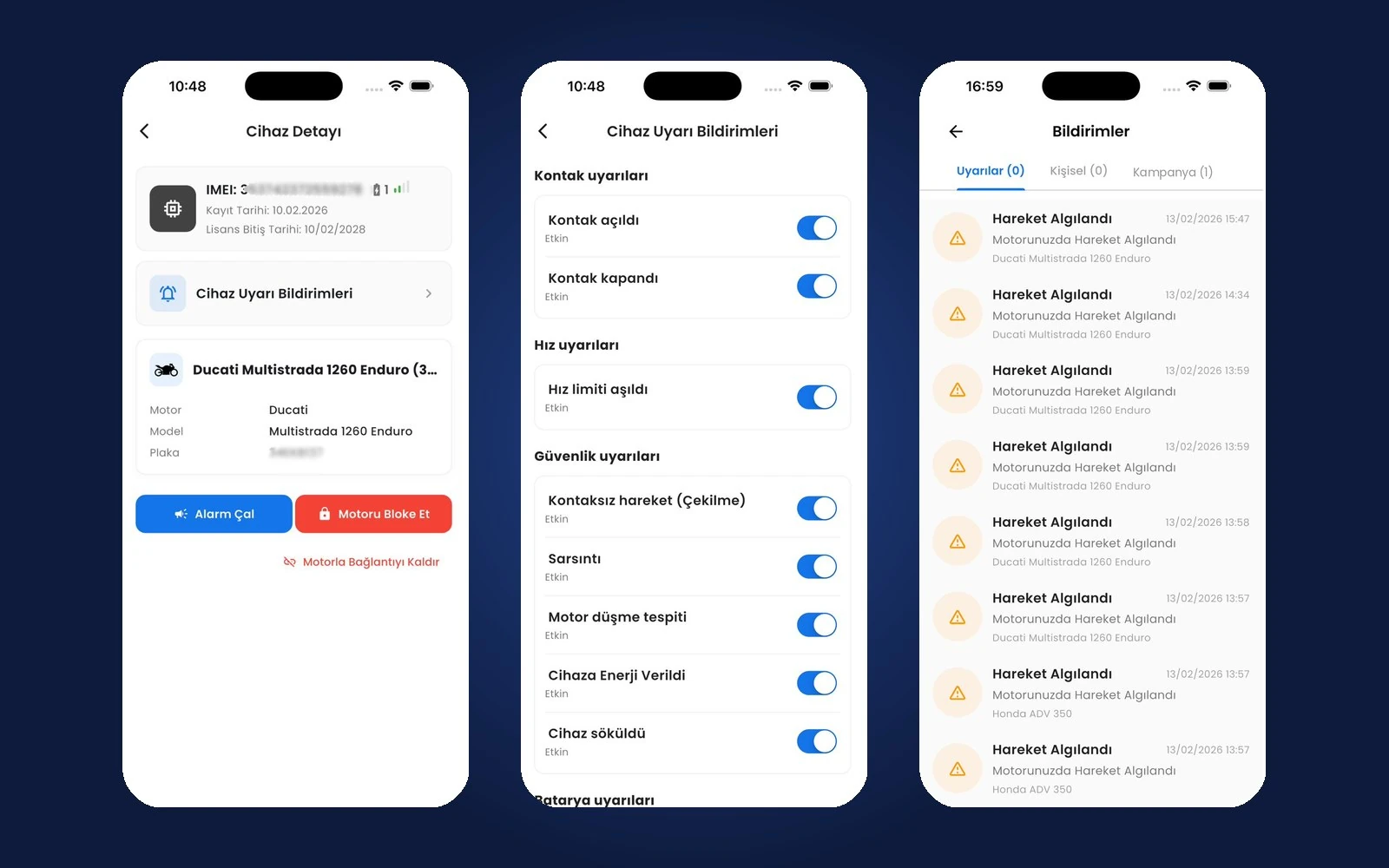
MotoSense is an end-to-end tracking and security platform we developed for a client in the motorcycle industry. It brings together, in a single structure, the IoT tracking device fitted to the motorcycle, the rider's iOS and Android app, and the web panel that manages operations. The location, speed, ignition, vibration, fall and battery data coming from the device is processed centrally; it reaches the rider as an instant notification and the operations team as a reportable movement log. We started the project by building the data flow and the command channel; then we developed the mobile app in the tracking, security, emergency, riding and store modules, and in the final phase we completed the admin panel.
From packet to notification: the rule engine
Thousands of devices send location packets within seconds; these packets had to be received without loss, put in order and reflected to the user instantly. For this we built an independent data ingestion service. A packet from the device is validated and written to the log, and flows instantly to all panels connected to the system; then a rule engine runs the speed, zone and event rules and triggers the notification service when needed. Situations such as exceeding the speed limit or leaving a defined zone land on the rider's phone as an instant notification.
On the rider's map screen, the motorcycle's live location, ignition status, speed, daily and total kilometers, battery voltage, the device's battery status, number of satellites and signal strength are shown together; with a single tap, the view switches between the motorcycle's location and the rider's own location. Past trips can also be reviewed on the map and in the data table, with speed and ignition information.
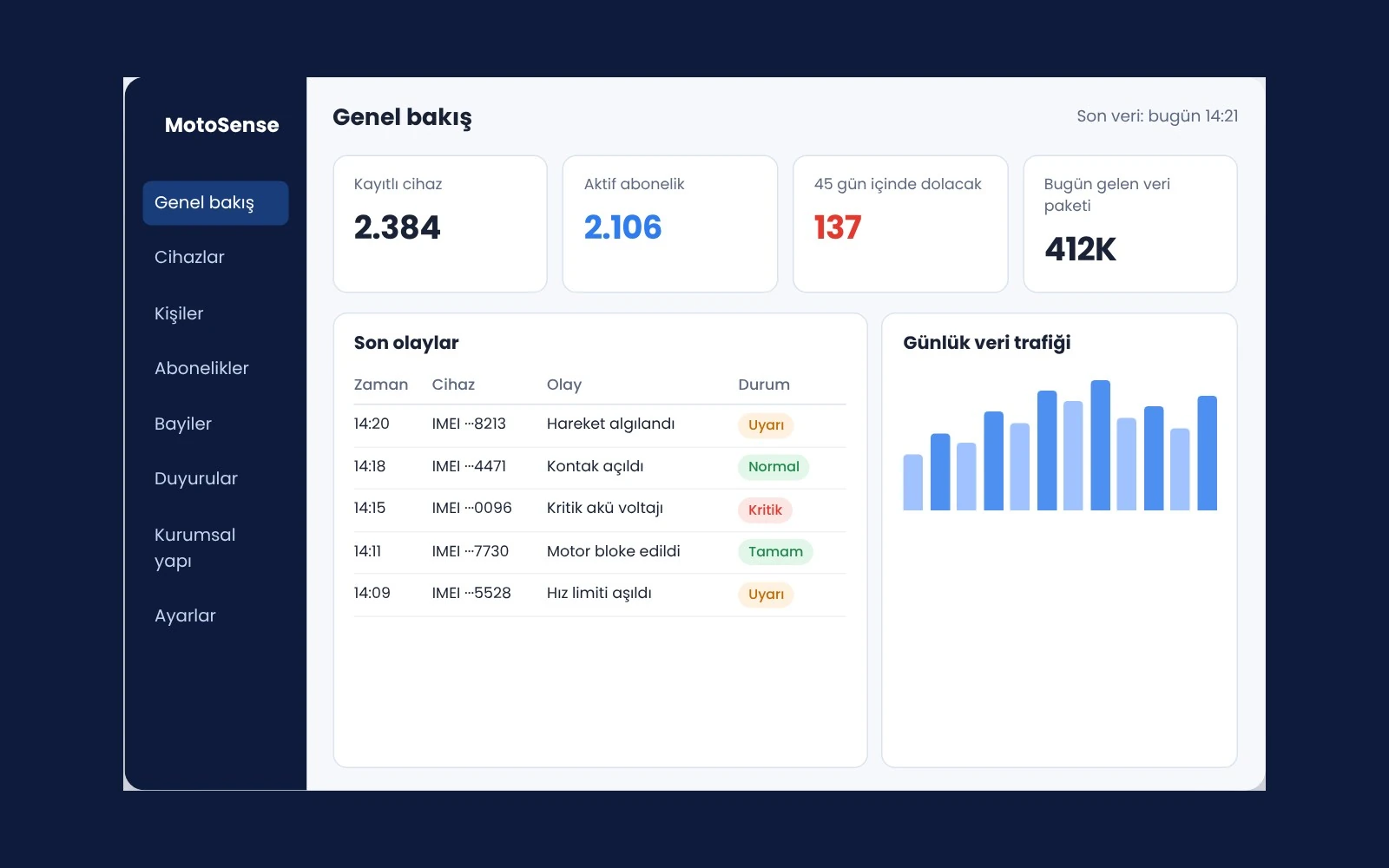
The same log is also the source for the operations team. In the web panel, movement data can be filtered by person, IMEI, date range and event type; coordinates, speed and timestamp are followed in chronological order.
Handing control to the rider
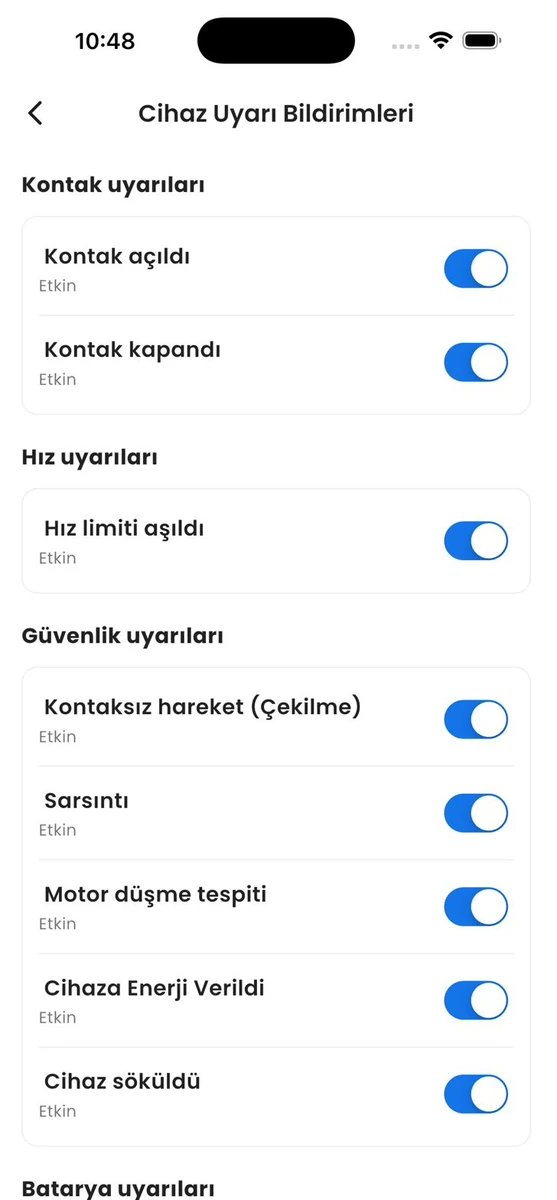
It was not possible to settle the false-alarm balance centrally with a single threshold; every rider's parking spot, motorcycle and expectations differ. So we handed the balance over to the rider's control. The threshold for vibration and towing detection can be adjusted in three levels. The alerts for ignition on and off, speed limit, towing, vibration, fall, power cut and device removal, in turn, can each be switched on and off individually. Alerts are grouped under the headings ignition, speed, security and battery. A rider who parks on a crowded street can lower the sensitivity; a rider in a closed garage can be notified at the slightest movement. Suspicious movements and vibrations that are detected are kept in a separate list in the app with timestamps; so alongside a single alert, the course of events can also be seen.
Intervening from the phone, commands over two channels
When the suspicion is confirmed, the rider has two moves: sounding the alarm and remotely immobilizing the motorcycle. But the moment these commands are most needed is the moment the device's data connection may be weak. That is why commands are delivered redundantly over SMS and the data channel, and feedback is received from the device. In the device details, alongside sounding the alarm and immobilizing the motorcycle, the commands to switch the device alarm on and off and to set the motion detection sensitivity are in the same place. The alarm, stop, immobilization and sensitivity commands are managed from the device connection parameters in the web panel.
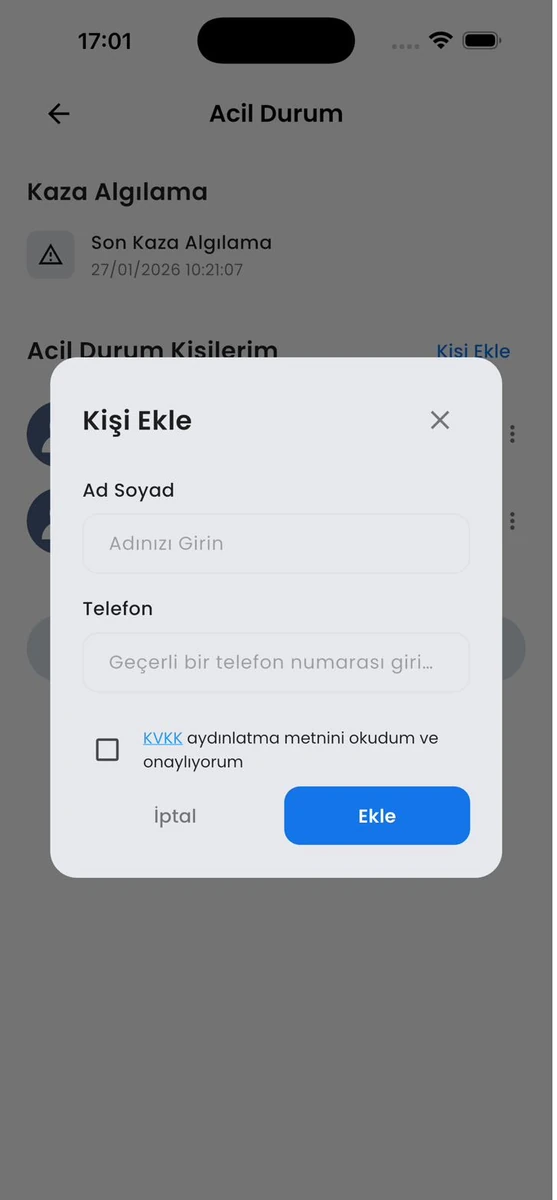
The same data line works at another critical moment too. When a fall is detected in a crash, an automatic call, SMS and notification go to the emergency contacts the rider registered in advance. These contacts can be registered only by confirming the KVKK (Turkish Personal Data Protection Law) privacy notice; the emergency screen also has the crash detection history and a quick help call button side by side. When the rider wants to share their location with relatives who do not have the app, a signed link is generated, valid for a duration chosen between one and eight hours or without a time limit; when the time runs out, access closes automatically. The same location infrastructure also works in group rides: on a tour planned by choosing the route, duration and participants, members follow each other live on the map. Notification and location permissions are managed from the rider's profile screen.
What we learned in the field
- One set of data, two views. The same movement log comes back to the rider as an instant notification and to the operations team as a reportable record.
- A false alarm is a security hole. An alarm that keeps going off can end up as an alarm that gets switched off; making the sensitivity adjustable is therefore not a convenience but a security measure.
- Leave the threshold to whoever knows the situation best. A rider who knows where their motorcycle is parked sets the sensitivity more accurately than the center can.
- A critical command needs a backup. An immobilization command that relies on a single channel may not get through at the moment it is needed most.
- Personal data should be processed with consent and for a limited time. Location sharing and emergency contacts are kept with consent, for a limited period and in a way that can be revoked.
In a security app, the most valuable moment is the one when the user trusts the notification. The way to earn that trust is to make sure every notification truly means something.
Your device is talking; can you listen?
If you have devices producing data in the field and you want to turn that data into meaningful alerts and reliable commands for your users, we can build a structure that runs from the device to the panel together. You can examine the mobile app and the admin panel on the MotoSense project page and get in touch with us.
About the author
Zeynep Çelik
Digital Content Specialist
She is part of Karatsoft's digital content team and writes blog articles. She explains in clear language which need each project and product answers and how it works in practice.



Comments
0No comments yet. Be the first to comment!
Leave a Comment
Feel free to share your thoughts and feedback with us.